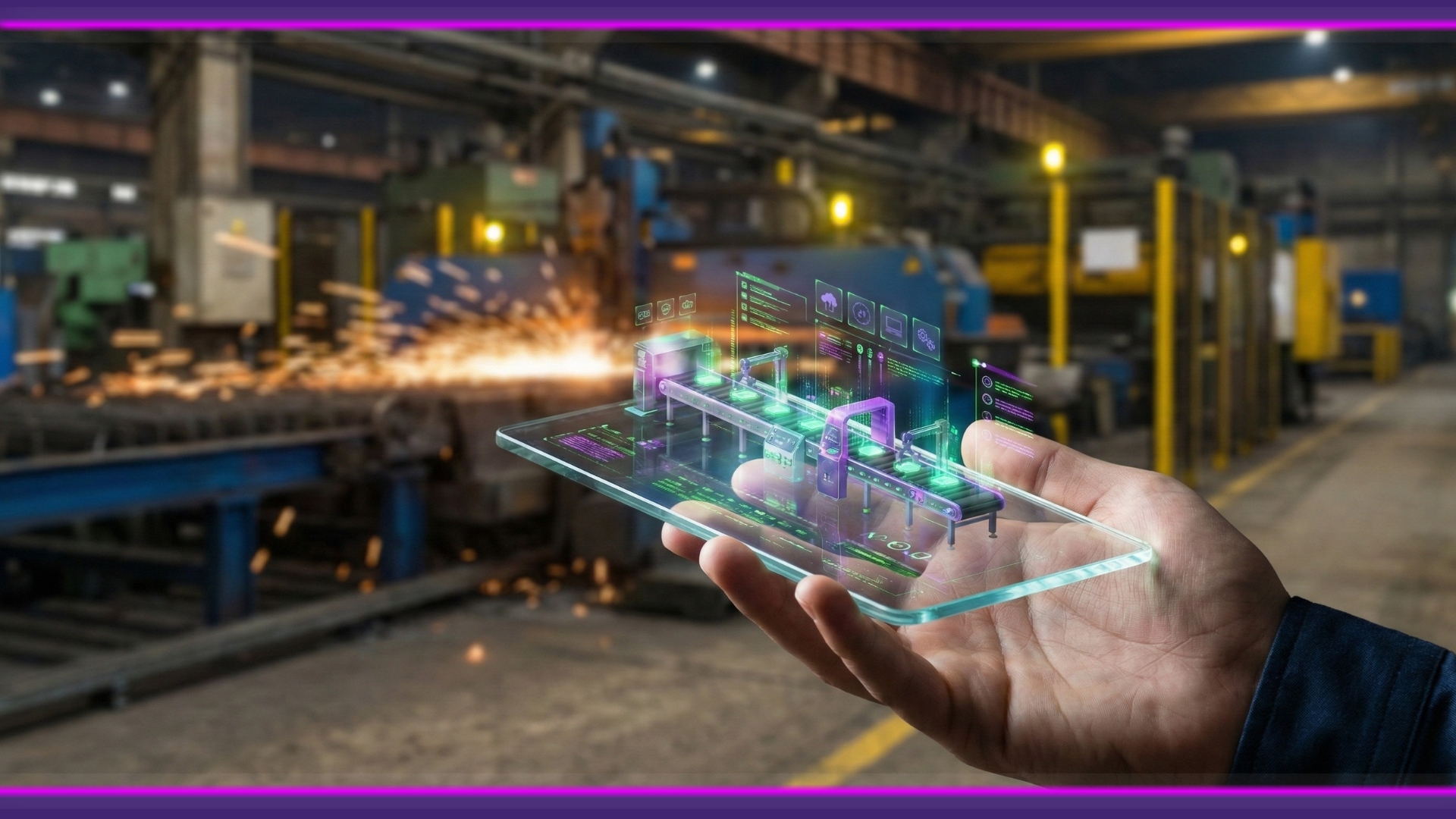
The world is full of strategic reports that gather dust on executive shelves. The “Execution Gap” – the chasm between knowing what to do and actually doing it – is the graveyard of digital transformation. The Digital Development Roadmap (DRD), pioneered by the DBR77 platform, was created specifically to bridge this gap. Unlike ADMA or SIRI, which focus heavily on diagnosis, DRD is obsessively focused on implementation and investment de-risking. It is designed for the factory owner who says: “I know I need to automate. But which robot? How much? And will it work?”.42
The DRD Philosophy: Action Over Analysis
The DRD methodology recognizes that for SMEs, the biggest barrier to Industry 4.0 is financial risk. A wrong investment in a robotic line can bankrupt a small company. Therefore, DRD moves the focus from “Assessment” to “Simulation.” Its core mantra is “Simulate-then-Procure.” You shouldn’t buy a machine until you have seen it work in a virtual environment.5
The 4-Step DRD Process
The DRD process is integrated directly into the DBR77 platform ecosystem.
1. The Megatrend Scanner
Before looking inside the factory, DRD looks outside. It uses AI algorithms to scan global industrial trends relevant to the company’s sector. This ensures that the roadmap isn’t building a factory for 2020, but for 2030. It identifies technologies that are becoming commoditized (cheap) versus those that are still experimental (risky).4
2. Digital Maturity & Gap Analysis
Like other models, DRD assesses the current state. However, it filters the findings through a “feasibility” lens. It doesn’t just list gaps; it identifies “Investable Gaps” – problems that can be solved with currently available, ROI-positive technology.1
3. The Digital Twin Simulation (The Game Changer)
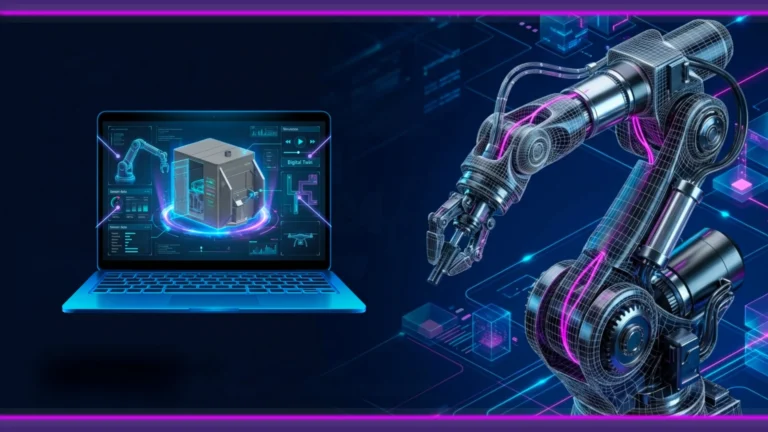
This is the heart of DRD. Once a potential project is identified (e.g., “Automate Assembly Line A”), the DBR77 platform facilitates the creation of a 3D Digital Twin of that specific workstation.
- How it works: The factory processes are modeled in a physics-based 3D environment.
- The Benefit: You can test different robots, speeds, and layouts in the software. You can prove that the robot will reach the part, that the cycle time will be met, and that there are no collisions – all before spending a cent on hardware.3
4. The Marketplace Connection
Most assessments end with a PDF recommendation. DRD ends with a Request for Proposal (RFP). The validated Digital Twin is published to the DBR77 Marketplace, where hundreds of system integrators can see exactly what needs to be built. They bid on the project based on the simulation.
- The Result: The factory owner gets comparable, competitive bids for a solution that has already been technically validated. This creates a “price discovery” mechanism that is usually absent in opaque industrial markets.2
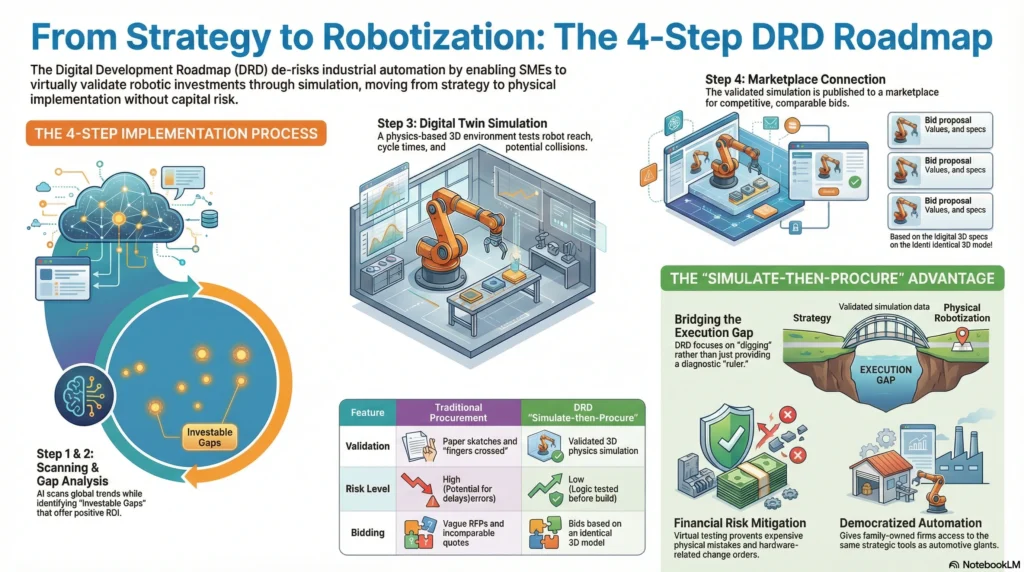
Figure 1: The “Simulate-then-Procure” Advantage. This 4-step DRD roadmap bridges the execution gap, allowing companies to validate robotic investments using physics-based 3D simulations before committing capital to physical hardware.
Hidden Benefits and Objections
- Objection: “Simulation is expensive and slow.”
- Counter: Traditional simulation was. DBR77 uses standardized “drag-and-drop” modules that make creating a Digital Twin faster and cheaper, accessible even to small firms. The cost of simulation is a fraction of the cost of fixing a physical mistake.5
- Benefit: Democratization. DRD gives a small family-owned factory access to the same strategic tools (Digital Twin, Global Sourcing) as a German automotive giant.
- Risk: It ties the user to the DBR77 ecosystem. While the strategy is sound, the execution relies on the quality of integrators present in the marketplace.2
Table: The “Simulate-then-Procure” vs. Traditional Model
| Step | Traditional Procurement | DRD “Simulate-then-Procure” |
| Concept | Paper sketches / Excel calculations | 3D Physics-based Simulation |
| Validation | “Fingers crossed” it works | Validated in virtual space (cycle times, reach) |
| Risk | High (Change orders, delays) | Low (Logic tested before build) |
| Bidding | Vague RFPs, incomparable quotes | Bids based on identical 3D model |
| Cost | High variance | Competitive market pricing |
FAQ: The Digital Development Roadmap (DRD) Approach
It helps, but DBR77 tools often allow for building the environment using libraries of standard objects. You don’t need a perfect architectural render; you need a functional process model.5
It is strongest for robotics and intralogistics (AGVs), but the “Roadmap” part covers broader digitalization including data collection and process optimization.4
Modern physics engines are extremely accurate regarding cycle times and kinematics. If it works in the Twin, it works in reality with a very high degree of confidence.5
Conclusion: The Tool for Doers
While ADMA provides the conscience and SIRI provides the ruler, DRD provides the shovel. It is the methodology for companies that are done with theory and ready to dig. By combining strategic roadmapping with the tactical power of Digital Twins and a Marketplace, DRD removes the two biggest fears of the SME owner: “Will it work?” and “Am I paying too much?”
Author: Tomasz Jankowski, R&D Specialist, DBR77

R&D Specialist at DBR77, focusing on IT development, Digital Twin technology, and automation. He has a strong background in managing EU projects and conducting research work. A graduate of Nicolaus Copernicus University in Toruń, he combines scientific precision with the implementation of technological innovations.
Cited works
1. DIGITALIZACJA POLSKICH FIRM PRODUKCYJNYCH, https://8195567.fs1.hubspotusercontent-na1.net/hubfs/8195567/materia%C5%82y%20z%20konferencji%202024/2024.03.13%20PREZENTACJA%20Raport%20o%20stanie%20digitalizacji.pdf
2. DBR77 Robotics, Dbr77DBR77 – DBR77 Robotics
3. CMMI Data, CmmiinstituteCMMI Institute – CMMI Data
4. drd – DBR77 Robotics, Dbr77drd – DBR77 Robotics
5. DigitalTwin – DBR77 Robotics, Dbr77DigitalTwin – DBR77 Robotics