DBR77 USA is now a member of A3 – the Association for Advancing Automation, North America’s largest trade association for robotics, machine vision, motion control, and industrial AI. For DBR77, this is more than a logo on a membership page — it is the next structural step in building a lasting presence in the US manufacturing market.
Why A3, Why Now
DBR77 is building its US presence on one principle: industrial intelligence that connects measurement, optimization, and automation — with accountability after go-live, not just before purchase.
Too many automation projects in the US still follow the same pattern: a promising purchase, a difficult integration, and no one accountable for results once the system is live. DBR77’s ecosystem — from real-time IoT data, through Digital Twin simulation, to integrator sourcing on the Marketplace — is designed to close that gap.
Membership in A3 anchors that approach in the heart of the North American automation community.
What A3 Membership Means for DBR77 and Its Customers
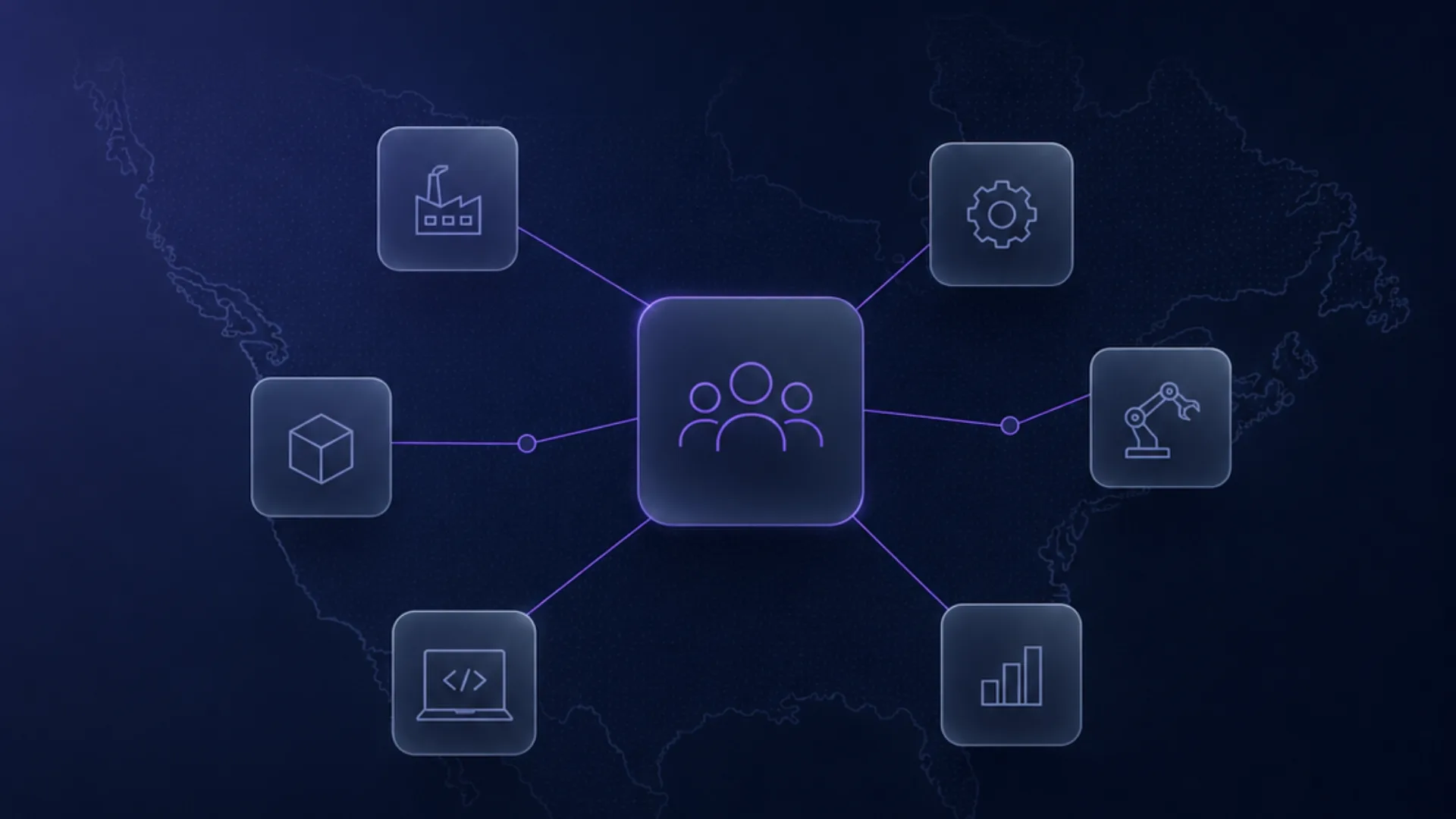
- Access to the largest automation network in North America — integrators, technology suppliers, and manufacturers under one roof
- Participation in industry standards and best practices that help manufacturers scale automation with less risk
- Presence at key industry events, building on DBR77’s recent participation in Robotics Summit & Expo in Boston
- A stronger bridge between US manufacturers and the DBR77 Marketplace of verified integrators and technology partners
The Team Behind DBR77’s US Expansion
DBR77’s growth in the United States is driven by a dedicated team: Torian Richardson, Justyna Laskowska, Piotr Wiśniewski, Ph.D., and Irina Lebedjuk — combining global business development experience with deep knowledge of the DBR77 industrial intelligence ecosystem.
The A3 membership follows a series of US milestones, including the Charlotte launch at IEX 2025 and this year’s presence at Robotics Summit & Expo in Boston.
What’s Next
DBR77 will use its A3 membership to deepen relationships with US integrators and manufacturers, contribute to the conversation on responsible automation adoption, and bring its Measure → Optimize → Automate approach to more American plants.
What partnership or standard would most help US manufacturers scale automation with less risk? Reach out to our US team directly.