Discover the top robotics trends for 2026. From Physical AI and Agentic Workflows to the rise of the “Digital Nervous System.” Learn how to de-risk your automation strategy.
Industrial Robotics in 2026: It’s No Longer About the Machine. It’s About the Brain.
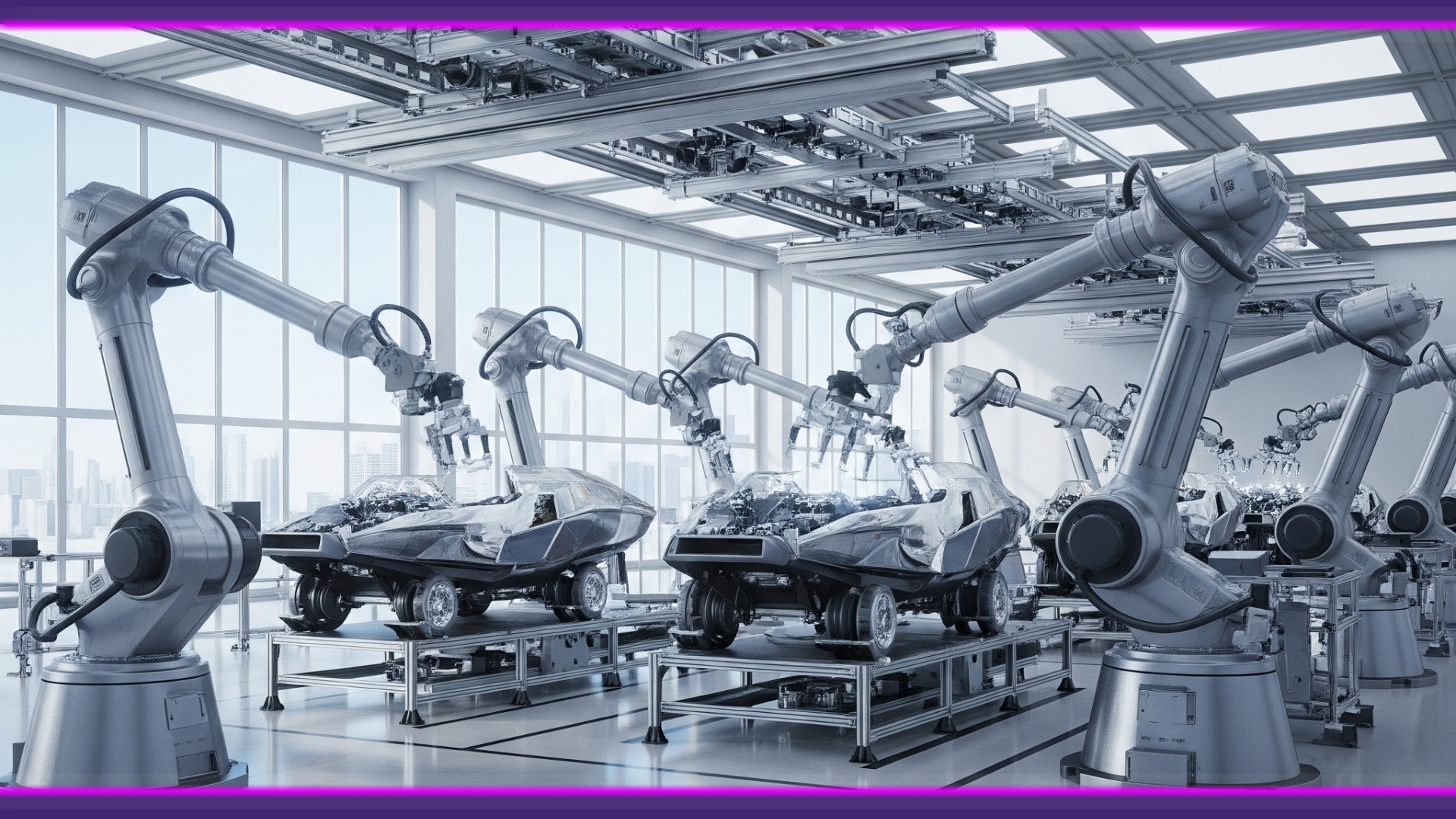
By 2026, the industrial landscape will have shifted fundamentally. Consequently, the question for manufacturing leaders is no longer if you should automate, but how intelligent that automation can be. In fact, the era of simply fencing off heavy robotic arms is history.
Furhermore, as we analyze the forecast for the coming year, we see a move away from isolated machines toward Physical AI and Agentic Ecosystems. Specifically for manufacturers, especially those facing the global labor shortage (the “Automation Gap”), this shift presents a stark choice: build a factory that reacts, or build one that predicts.
Here are the three definitive trends that will shape industrial competitiveness in 2026, along with advice how you can leverage them to de-risk your investments.
Trend 1: The Rise of “Physical AI” and Humanoid Labor
In 2025, we saw the prototypes. However, in 2026, we are seeing the pilots turn into production reality. The paradigm is shifting from specialized machines to general-purpose Physical AI.
In contrast to traditional industrial robots programmed for a single, repetitive task (like welding or palletizing), Physical AI agents – often in humanoid form – can perceive, understand, and navigate unstructured environments. Driven by advances in Vision Language Models (VLMs), these robots act less like machines and more like intelligent partners.
Why this matters: Because humanoids are designed for human spaces – stairs, narrow aisles, and existing brownfield facilities. You don’t need to rebuild your factory for them; they adapt to you.
The Strategic “Catch”: Nevertheless, there is a challenge: these advanced robots generate terabytes of data every hour. Therefore, without a centralized system to process this data, they are just expensive hardware. To truly function, they require a “Digital Nervous System” – an integrated platform like IRIS 77 – that can ingest data from the robot and correlate it with your production plan, ensuring the “body” knows what the “brain” of the factory wants.
Trend 2: The “Simulate-then-Procure” Economy
The era of “CapEx Guessing” is officially over. Given the high cost of capital and the complexity of modern robotics, 2026 marks the end of buying hardware based on paper specifications alone.
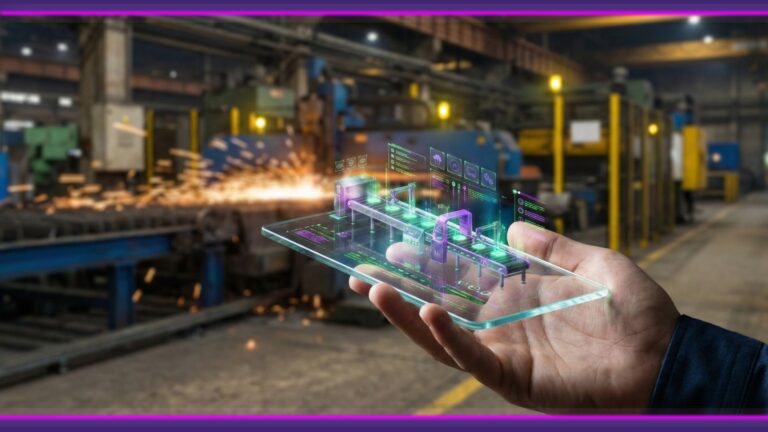
As a result, the prevailing trend is “Simulate-then-Procure.” Before a single dollar is spent on a physical robot or integrator, the entire work cell is built, tested, and optimized in a Digital Twin environment.
The shift in buying: Consequently, this trend is reshaping how technology is sourced. Manufacturers are moving away from traditional catalogs to digital platforms where they can verify ROI before purchase. This is the core philosophy behind the DBR77 Marketplace – we allow you to visualize the robot in your specific 3D environment first. In turn, this brings mathematical precision to your investment strategy, eliminating the risk of mismatched technology.
Trend 3: From Automated to Autonomous (Agentic AI)
While traditional automation follows rules. Agentic AI makes decisions. In 2026, we are moving towards the “Self-Correcting Factory.” This means your production schedule is no longer a static document; rather it is managed by AI agents that can react to changes instantly.
Imagine this scenario: A sensor on a CNC machine detects a vibration anomaly.
- The Old Way: First, the machine fails. Then, production stops. Finally, you scramble to call maintenance.
- The 2026 Way: On the other hand, an AI agent detects the anomaly. It instantly queries your planning system to find a gap in production, simultaneously schedules a maintenance ticket, and re-routes production to Line B – all before the machine fails.
The solution: However, this level of autonomy requires deep integration. It’s not enough to have a robot; you need an operating system that connects your machines (IoT) with your planning (APS). Tools like our IRIS 77 module are designed specifically to bridge these silos, turning isolated data points into autonomous actions.
Summary: Your Roadmap for 2026
Ultimately, technology is useless without a strategy. As you prepare your facility for 2026, keep three rules in mind:
- First, Don’t Buy Robots Blindly. Map the Process. In reality, 90% of automation failures are process failures, not technology failures. Understand your bottlenecks before you automate them.
- Second, Establish a Digital Nervous System. You cannot plug a 2026 humanoid robot into a 1990s Excel spreadsheet. Therefore, you need a unified data platform to orchestrate your fleet.
- Third, Validate Before You Invest. Use Digital Twin technology to simulate your ROI. If it works in the simulation, it will work on the shop floor.
FAQ: Common Questions on Robotics Trends
A: Increasingly, the answer is no. The trend towards “Physical AI” and cobots means machines are becoming easier to program, often using natural language or “teach-by-demonstration.” However, integrating them into your wider factory system usually requires a partner. Platforms like the DBR77 Marketplace connect you with vetted integrators who handle the technical setup for you.
A: Historically, it was expensive. But in 2026, it is becoming accessible via SaaS models. You no longer need to buy expensive enterprise software licenses. You can use platforms (like DBR77) to create a specific twin for a specific workstation or line, paying only for what you use.
A: Look beyond labor savings. For example, Agentic AI improves OEE (Overall Equipment Effectiveness) by reducing unplanned downtime and optimizing material flow. When calculating ROI, consider the cost of “saved mistakes” – decisions that were corrected before they caused a delay.
Ready to explore these technologies? Check out the DBR77 Marketplace to see verified robotic solutions or book a demo of IRIS 77 to see how a Digital Nervous System works in practice.
Author: Piotr Wiśniewski, Global CEO, DBR77