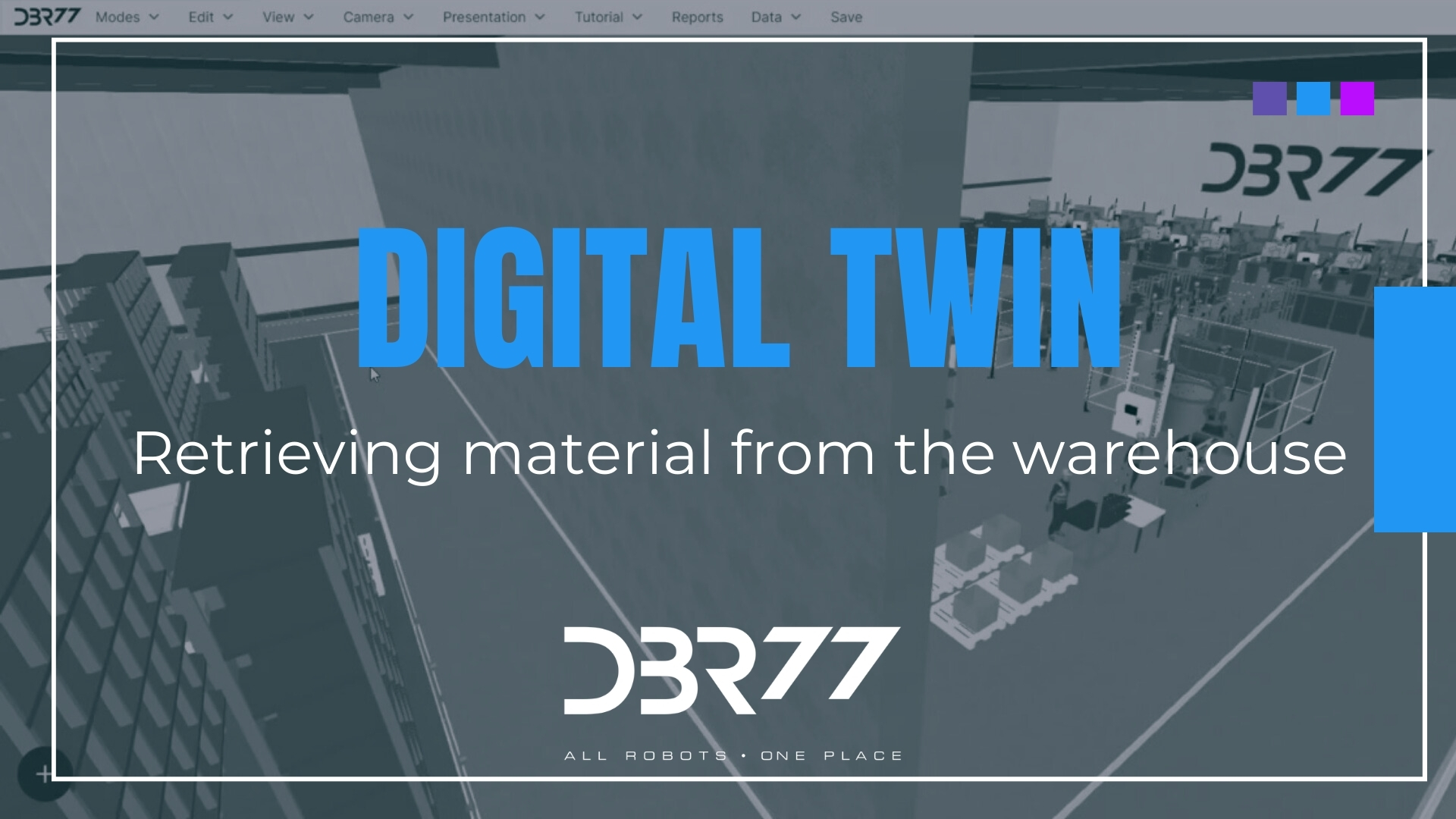
The next case study will introduce you to the issue of optimizing the process of picking materials from the warehouse for production. The DBR77 Digital Twin helped an HVAC manufacturer cope with high variability in the products it manufactures, and thus select the optimal way to pick materials from the warehouse.
Case description
Our client is a manufacturer of ventilation and cooling equipment. The production plant is located in the Mazovia Province and employs over 150 people working in two production shifts. However, the issue concerned the warehouse area, and more specifically “picking.” The manufactured devices are highly customized, which significantly complicates the issue of picking. In addition, if we take into account the average number of picks at 800 items per shift, the situation becomes even more complicated. The plant is located in central Poland, operates in two shifts, and a total of 10 people work in the area under analysis (warehouse – pick).

Task description – collecting material from the warehouse
The customer’s challenge stems from the profile of the manufactured products. At first glance, the products may look similar, but they can be tailored to the needs of the end customer in a wide range of ways. The key to solving this problem was to create the ability to generate a list of withdrawals in a dynamic way, taking into account the product mix planned for a given day. The customer used warehouse pick simulations in the Digital Twin environment.
Completed work
1. Building a Digital Twin:
- Creation of a digital twin representing the warehouse section.
- Development of transport routes and boundary conditions for the material collection process.
- Defining the operating parameters and the means of transport used for collection
2. Simulation of material withdrawals:
- Preparation of process data structure.
- Importing data into the system with the appropriate structure to feed the algorithms.
- Selecting the appropriate algorithm for the task.
- Generating the most optimal download list.
Results and conclusions – collection of material from the warehouse
The simulation results show the progressive possibility of optimizing the material collection process. In the simulation, we reflected three states – the first one, which performs collections without optimization, assuming the order of collections based on the order of production orders (simulation result 1000s). The other two used the island and sorting algorithms, respectively (550s and 200s, respectively). Optimization using simulation shows the potential for a 60% reduction in the operation time of the pre-optimized process.
Benefits for the company
In summary, thanks to the use of a digital twin, the company prepared a simulation of material withdrawals based on current production orders in just a few days and has the ability to update the process in a very short time – all it takes is to import the updated production order, and the selected algorithm will find a solution in seconds. This is particularly important in emergency situations: lack of raw materials, operators, or other factors that necessitate changes in production.
Why is Digital Twin the optimal solution?
1. Quick process mapping capability
A digital twin allows for quick and accurate reproduction of the actual production process in a virtual environment. Thanks to advanced modeling and visualization tools, processes can be mapped with high precision, enabling better understanding and analysis of their functioning. In addition, rapid mapping reduces the time needed for planning and implementation, which is crucial in dynamic and competitive markets.
2. Simulation capability based on defined algorithms
A digital twin enables the simulation of production processes using defined algorithms. This allows you to test different scenarios, predict potential problems, and optimize system performance without having to make changes to the actual process. Since simulations can take into account various variables, such as changes in demand, availability of raw materials, or machine failures, it is possible to better prepare for actual operating conditions.
3. Ease of updating assumptions and generating new alternative material withdrawal lines
A digital twin offers flexibility in updating assumptions and creating new alternative scenarios. This means that as production conditions change, assumptions can be easily modified and new alternative material withdrawal lines can be quickly generated. As a result, the ability to adapt allows you to respond to changes in the production environment on an ongoing basis, which increases efficiency and operational flexibility.
SUMMARY
In summary, the introduction of the DBR77 Digital Twin enabled the optimization of the material retrieval process in the warehouse for an HVAC manufacturer. Thanks to simulation in a digital environment, the company was able to dynamically generate retrieval lists adapted to production variability, which significantly improved warehouse operations. The analysis showed that the time needed to pick materials can be reduced by up to 60% through the use of advanced algorithms.
Watch the entire video (switch YouTube settings to hear it in your language):